Understanding Artisan Quality in Journals
What makes a journal artisan quality goes far beyond aesthetic appeal or a high price tag. True artisan quality emerges from intentional material selection, meticulous construction, and a commitment to creating something that improves with use rather than deteriorates. The distinction between mass-produced notebooks and genuinely artisan journals lies in the details that most readers never examine until they begin writing in one.
A journal is both a functional tool and a vessel for thought. The difference between a standard notebook and a thoughtfully constructed artisan journal is immediately tactile: the paper feels different under a pen, the binding responds differently to repeated opening, and the overall experience of writing becomes something worth preserving.
An artisan journal prioritizes the writer's experience over production speed, shaping decisions about paper fiber, binding tightness, cover finish, and how materials age. Understanding these elements helps readers recognize what they're investing in.
Material Selection and Natural Fibers
The foundation of any artisan journal begins with paper. Mass-produced notebooks often rely on wood pulp, which yellows over time.
Cotton Rag Paper and Archival Standards
Cotton rag paper uses cotton fibers rather than wood pulp, making it more stable and resistant to yellowing and brittleness.
Cotton rag paper can accept ink more evenly than wood pulp, potentially reducing feathering and supporting cleaner writing.
Leather Quality and Patina Development
A journal's exterior determines its lifespan and character. Full grain leather, which retains the hide's natural surface, can develop a patina over time, darkening and softening with use.
Synthetic covers resist wear uniformly but lack the living quality of leather. A journal made with genuine leather can evolve over time, creases, color shifts, and softening are often seen as features, not flaws.
Leather quality affects how a journal feels and its durability.
Types of Journal Bindings and Construction
The way pages attach to the cover determines whether a journal survives years of use or falls apart after months. This is where construction quality becomes visible and testable.
Stitch Density and Durability
Hand-stitched bindings can represent a durable construction method. The visible stitching along a journal's spine holds the structure together, and stitch density, how closely stitches are spaced, can correlate with durability.
Tight, consistent stitching can withstand repeated opening without pages loosening.
Binding Techniques That Stand the Test of Time
Coptic binding, one of the oldest techniques, creates a flexible spine that can open flat and distribute stress across multiple points.
Sewn bindings attach signatures to the cover using thread, creating a structure that can flex with use.
Perfect binding, where pages are glued to the spine, appears in mass-produced notebooks.
Best Paper for Fountain Pens and Writing Quality
Fountain pen users face particular demands that mass-market paper often fails to meet. The liquid ink and fine nib of a fountain pen require paper with specific characteristics to perform well.
Paper Weight, Grain Structure, and Absorbency
Paper weight affects how a pen glides and how ink sits on the surface. Heavier paper can provide substance and resist buckling; lighter paper may show bleed-through.
Grain structure influences how a pen interacts with the surface. Fine, consistent grain accepts ink uniformly and reduces feathering; coarser grain offers tactile feedback but may compromise ink flow.
Absorbency, how quickly paper accepts and holds ink, determines whether writing feels smooth or scratchy. Paper that's too absorbent drinks ink too quickly, making lines fade and pens skip. Paper that's too resistant creates friction and slows the nib.
Ink Compatibility and Feathering Resistance
Feathering occurs when ink spreads beyond the intended line, creating fuzzy or blurred writing. It's more common with fountain pens than ballpoints because fountain pen ink is more fluid. Paper that resists feathering has often been composed to accept ink without allowing it to migrate sideways through the fibers.
Testing ink compatibility before committing to a journal makes sense for fountain pen users. A quick sample with your preferred pen reveals whether the paper will perform as you expect.
The relationship between pen and paper is where artisan quality becomes tangible. A journal designed with fountain pens in mind can feel noticeably different, smoother, more responsive, more rewarding to write in.
Handmade Versus Factory Production
The terms "handmade" and "artisan" are often used interchangeably, but they describe different things. A handmade journal is literally assembled by hand, while an artisan journal prioritizes quality and traditional methods, which may or may not involve hand assembly.
Beaded Look Elephant Woven Blanket →
Handmade journals can involve human labor at every step, which may limit production volume and typically increases cost. Factory-produced artisan journals can achieve quality through careful sourcing and controlled manufacturing. The distinction matters less than whether the final product meets artisan standards: quality materials, thoughtful construction, and attention to how the journal will perform and age.
Some artisan journals combine methods, such as machine-cut paper with hand-stitched binding. This hybrid approach can deliver artisan quality. What matters is whether each component was chosen and executed to prioritize longevity and user experience.
Transparency about production method can be a quality signal.
Ethical Sourcing and Labor Practices
Understanding where materials come from and how workers are treated can shape whether a journal truly represents artisan quality. Ethical sourcing can involve knowing the origin of paper, leather, and thread, not just their specifications, but the conditions under which they were produced.
Cotton rag paper typically comes from established mills with documented practices. Leather sourcing varies widely.
Labor practices can matter similarly.
Transparency about sourcing and labor can build trust.
Sensory Evaluation and the Journaling Experience
The true test of artisan quality happens when a pen meets paper. The sensory experience, how the journal feels, sounds, and responds, reveals whether the design choices were intentional or accidental.
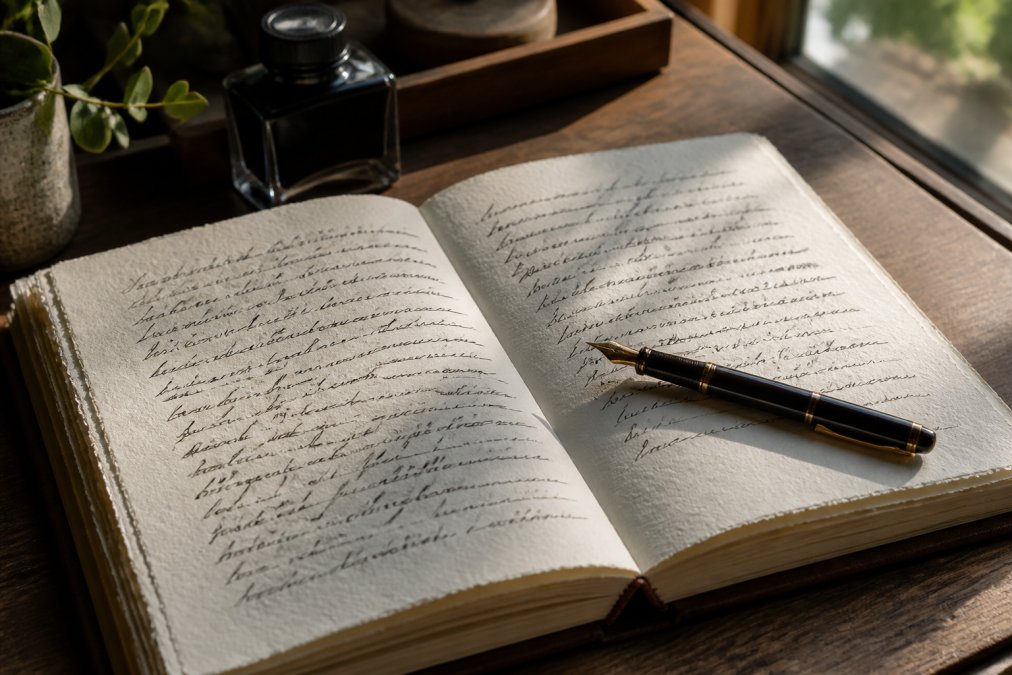
Running a pen across quality paper can feel smooth and responsive. The paper should accept ink cleanly without feathering or bleeding through. The pages should turn without sticking or tearing. The binding should open flat or nearly flat, supporting comfortable writing across the full width of the page.
Holding the journal should feel substantial, not heavy, but present. The cover should have weight and texture, not feel thin or cheap. Opening it repeatedly should feel like a gesture worth making, not a chore. These sensory qualities matter because they determine whether someone actually uses the journal or sets it aside as too precious to write in.
The sound of writing, the friction between pen and paper, can influence whether writing feels like a pleasure or a task.
Maintenance, Restoration, and Longevity
An artisan journal's value includes its ability to survive years of use and, if necessary, be restored. This longevity depends partly on materials and construction but also on how the owner cares for it.
Proper storage protects a journal from environmental damage. Keeping it away from direct sunlight, extreme humidity, and temperature fluctuations preserves both the paper and the cover. Leather covers benefit from occasional conditioning with leather-appropriate products, which keeps the material supple and prevents cracking.
Over time, even well-maintained journals may need repair. A loose page can sometimes be resewn. A worn leather cover can sometimes be refinished. A water-damaged spine can sometimes be restored.
Mass-produced journals, by contrast, are often designed to be discarded rather than repaired.
A journal can be worth the effort to maintain and restore. A journal that lasts decades, improving with age and surviving occasional damage, can represent a different kind of value than one designed for a single year of use.
An artisan journal is a deliberate choice to prioritize writing experience and longevity over convenience and cost. It begins with quality materials and continues through construction methods that prioritize durability and flexibility. It shows in sensory details: how the paper accepts ink, how the binding opens, how the cover ages.
Recognizing artisan quality means looking beyond marketing language to examine actual materials, construction methods, and design choices. It means understanding that a higher price reflects not just aesthetics but engineering, the work of choosing and combining elements to create something that improves with use rather than deteriorating.
For those who write regularly, whether journaling, note-taking, or correspondence, an artisan journal becomes a tool worth investing in. It transforms a daily practice into something more intentional. Explore the Artisan Nature, History & Curiosity Journals collection to discover options that align with your writing practice and aesthetic preferences.
Frequently Asked Questions
What are the defining characteristics of artisan-quality paper?
Artisan-quality paper can combine natural fibers with careful manufacturing to achieve superior durability and tactile quality. Look for papers with visible grain structure and consistent weight. Quality paper can absorb ink evenly without feathering, creating clean lines whether you use fountain pens or traditional writing instruments. The surface texture should feel substantial under your hand, not thin or uniform like mass-produced paper.
How does binding technique affect the longevity of a journal?
Binding technique can directly determine whether a journal survives years of daily use or falls apart within months. Artisan journals can use sewn bindings, which distribute stress across the spine rather than concentrating it at glue joints. Traditional bookbinding methods can allow pages to open flat and flex naturally. Mass-produced journals often use adhesive binding. The thread material and knot quality can also matter.
What's the difference between handmade and factory-made journals?
Handmade journals can feature independent makers or small studios controlling various steps, from paper selection to cover material and quality control. Each journal can receive individual attention, meaning variations in color or texture may reflect intentional choices. Factory-made journals often prioritize speed and cost reduction. Handmade journals may cost more upfront and can develop character over time. Factory journals typically show wear quickly.
Why does paper weight and texture matter for journaling?
Paper weight (measured in gsm or pounds) affects how ink sits on the surface and how the page feels under your pen. Heavier papers can resist ink bleed and feathering, which can be essential for fountain pens or wet media. Lighter papers may feel flimsy and allow ink to seep through to the next page. Texture, whether smooth, lightly textured, or heavily grained, influences the writing experience and how ink interacts with the surface. Smooth papers can suit fine-tip pens and precise writing; textured papers can add visual interest. Artisan journals often choose paper weight and texture intentionally to match the intended writing style.