Why Boutique Checkouts Deserve a Closer Look
Knowing how to verify secure boutique online payments matters most precisely where the familiar cues disappear. A large retailer's checkout arrives wrapped in brand recognition; a small studio's page asks for the same card number with far less context. That gap is where hesitation lives, and it is reasonable hesitation.
This guide from Lace & Grit walks through the checks that separate a trustworthy independent checkout from a careless one: the certificate behind the padlock, the payment methods that limit exposure, the trust signals small shops tend to overlook, and the warning signs worth walking away from. None of it requires technical training. All of it takes about two minutes per purchase.
The stakes are straightforward. Card details entered on an unsecured page can be intercepted, and a merchant with no verifiable identity offers no recourse once a charge goes through. The Federal Trade Commission's guidance on online shopping scams frames the core problem well: the transaction is only as safe as the weakest link between browser and merchant.
How to Check SSL Certificates for Websites Before You Buy
Checking a certificate takes seconds. Look at the address bar before entering anything, and treat the padlock as a starting point rather than a verdict.
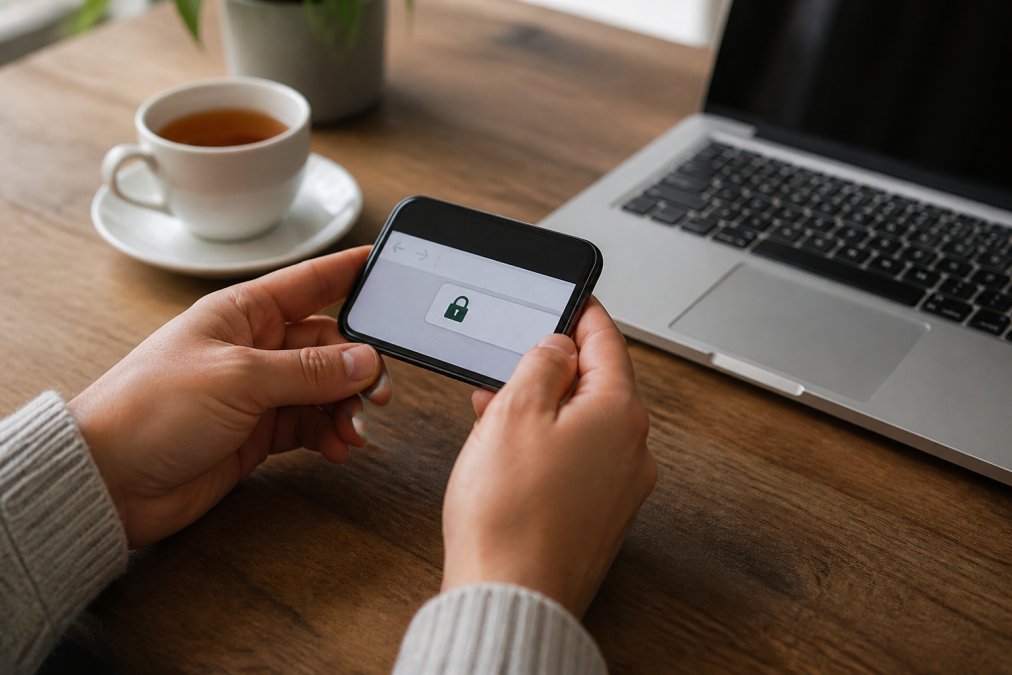
Reading the Padlock and the Full Web Address
The padlock icon means the connection between browser and server is encrypted. It does not mean the merchant is honest, only that the channel is private. Click or tap the icon in most browsers and a small panel appears showing who holds the certificate.
Read the full web address too, not just the first few characters. A boutique's domain should match the name on its social profiles, receipts, and emails. Misspellings, extra words, or unfamiliar subdomains deserve a second look.
What a Valid Certificate Actually Confirms
A valid SSL certificate confirms three things: the site's identity has been checked against a registry, the connection uses HTTPS encryption, and the certificate has not expired. An expired certificate triggers a browser warning, and that warning should end the transaction.
What it does not confirm is whether the business exists, ships reliably, or honors returns. Those questions belong to the next section.
Secure Online Shopping Best Practices for Small Retailers
Small shops often run leaner checkout stacks than national chains, which makes payment method choice more consequential. The right instrument limits what a bad actor can reach if a boutique's payment page is ever compromised.
Credit Cards, Virtual Cards, and Digital Wallets
Credit cards generally offer stronger fraud protections than debit cards, because disputed charges are resolved against the card issuer's funds rather than a checking account. A virtual credit card goes further: it generates a one-time number tied to a single merchant, so a breach exposes nothing reusable. Many card issuers now offer these in their apps, and they are the single most useful tool for a first purchase from an unfamiliar boutique.
Digital wallets add another layer. Apple Pay, Google Pay, and similar services tokenize the card number, meaning the merchant never sees the real digits. A payment gateway processing the charge receives a token instead. The practical difference for a boutique shopper is that a compromised checkout yields nothing a thief can reuse.
| Payment Method | What the Merchant Sees | Best For |
|---|---|---|
| Debit card | Full card number | Familiar, established shops |
| Credit card | Full card number | General protection and dispute rights |
| Virtual card | One-time number | First purchase from a new boutique |
| Digital wallet | Tokenized reference | Mobile checkout, repeat purchases |
Why Virtual Cards Matter Most at Small Shops
A national retailer typically has a dedicated security team, a mature fraud-detection stack, and a brand reputation worth protecting. A boutique may run its entire storefront on a hosted platform with a single administrator. That asymmetry is not a reason to avoid small shops; it is a reason to arrive with a payment method that assumes the worst.
A virtual card number is issued for one merchant, often with a spending cap and an expiration measured in weeks rather than years. If the boutique's checkout is later breached, the exposed number is already inert. Most major card issuers now generate these inside their mobile apps in under a minute, and some let you set a per-transaction limit before the number is issued.
Two-Factor Authentication and One-Time Passcodes
Two-factor authentication protects the account side of the transaction, not just the payment. When a shop or card issuer sends a one-time passcode by text or prompts a biometric verification scan, that step blocks anyone holding a stolen password.
Enable it everywhere it is offered. The few extra seconds are the cheapest insurance in online shopping.
Judging Merchant Legitimacy Beyond the Padlock
Encryption says nothing about whether a business is real. Establishing merchant legitimacy requires a different set of checks, and they take about as long as reading a product description. Most generic security guides stop at the padlock; the checks below are the ones that actually separate a working boutique from a storefront assembled last week.
Contact Transparency and Business Identity
Start with the contact page. A legitimate boutique publishes a physical mailing address, a working phone number, and an email domain that matches the website. A contact form alone, with no address anywhere on the site, is a meaningful gap.
Then look for consistency. Does the business name on the checkout match the name on the About page, the social accounts, and the order confirmation email? Mismatches between these are one of the clearest signals of a storefront assembled quickly and abandoned just as fast.
PCI compliance is the standard governing how a merchant handles card data, and the practical question for a shopper is simpler: does the checkout page hand off to a recognized security provider, or does the site collect card details itself? Handoffs to established processors are a good sign.
Domain Age, Social Footprint, and the Paper Trail
A boutique that has been operating for years leaves a paper trail. A domain registered last month does not. Free WHOIS lookup tools show when a domain was first registered, and a registration date within the past few weeks is worth noting, not disqualifying, but worth pairing with other signals.
Social media presence is the next check. A real boutique typically has an Instagram or similar account with a history of posts, tagged customer photos, and comments that predate the current season. An account created recently, with a handful of polished product shots and no engagement history, tells a different story. Look at whether the account links back to the same domain you are shopping on, and whether the shop's name appears in gift guides, forum threads, or press mentions from prior years.
Browser Tools That Vet a Boutique Before Checkout
Most modern browsers include built-in protections that flag known malicious sites, and security extensions can add a second opinion. These tools are not a substitute for judgment, but they catch the obvious cases, typosquatted domains, sites reported by other shoppers, and pages that attempt to download files during checkout.
A quick pattern that costs nothing: open the boutique in a new tab, run the site's exact business name through a search engine alongside the word "review," and check whether the results include independent mentions, a magazine feature, a stockist listing, a customer post, rather than only the shop's own pages.
Return Policy as a Trust Signal
A return policy written in plain language, with a stated window and clear conditions, tells a shopper the business expects to still be around when the package arrives. "Returns accepted within 30 days, unworn and in original packaging, buyer pays return shipping" describes a business with a process. "Contact us with any issues" describes a business hoping nobody does.
A shipping page that names a carrier and gives a realistic timeframe is the companion signal. "Fast shipping" with no detail is not a policy; it is a placeholder.
Boutique-Specific Trust Signals Most Shoppers Miss
Independent shops cannot lean on brand recognition, so the signals that matter are quieter. A return policy written in plain language, with a stated window and clear conditions, tells a shopper the business expects to still be around when the package arrives.
Look for a shipping page that names a carrier and gives a realistic timeframe rather than "fast shipping" with no detail. Check whether the shop lists a business registration number, a tax identifier, or a state-level filing reference. These are the small proofs that a business is accountable to someone.
Reviews deserve a closer read than a star average. A boutique with a modest number of detailed, specific reviews is more credible than one with hundreds of identical five-star lines posted in the same week. Lace & Grit publishes its 37 reviews openly, which gives shoppers something concrete to weigh rather than a vague promise of quality.
Return Policy as a Trust Signal
A return policy functions as a written commitment, and its specificity is the tell. "Returns accepted within 30 days, unworn and in original packaging, buyer pays return shipping" describes a business with a process. "Contact us with any issues" describes a business hoping nobody does.
Red Flags in an Insecure Checkout
Certain patterns should end a purchase immediately, regardless of how good the product looks.
- The browser warns that the connection is not private, or the address bar shows HTTP rather than HTTPS
- The checkout asks for a Social Security number, a driver's license scan, or a bank login
- Payment is requested by wire transfer, gift card, or cryptocurrency only
- The site pressures with a countdown timer that resets on refresh
- Prices sit far below what comparable goods sell for elsewhere
- Phishing cues appear: emails or texts urging immediate payment through an unfamiliar link
- No physical address, no phone number, and no named owner anywhere on the site
Any one of these warrants stopping. Two or more together make identity theft and fraud awareness concerns rather than mere caution.
What to Do If You Suspect a Payment Site Is Compromised
Act on the card first, then the evidence. Call the card issuer using the number on the back of the card, not any number that appeared on the suspicious site, and ask for the card to be frozen and the charge disputed. Issuers handle this routinely, and speed matters more than certainty.
Change the password on any account created at that shop, especially if the same password protects an email address. Enable two-factor authentication on that email account if it is not already active.
Report the site to the Federal Trade Commission's fraud reporting portal and to the FBI Internet Crime Complaint Center. Reports feed into pattern tracking that protects other shoppers, even when a single loss is small.
Keep the evidence: order confirmation, screenshots of the checkout page, and any correspondence. Card issuers ask for it during dispute resolution.
Shopping Small Without Losing Peace of Mind
Buying from independent makers carries real rewards, and none of them require accepting avoidable risk. The checks in this guide, certificate inspection, payment method choice, legitimacy verification, and a careful read of the return policy, take a few minutes and cover the vast majority of what can go wrong.
A secure transaction is a shared responsibility, and the shopper's half is smaller than it looks. Encrypted checkout, tokenized payment, and a published return policy do most of the work. The rest is attention.
For those building a home around nature-inspired pieces, the Botanical Home Décor Collection and the Cabinet of Curiosities Home Décor Collection offer a place to practice these habits on a checkout designed with them in mind. Lace & Grit processes payments with 256-bit SSL and 2048-bit RSA encryption, publishes its reviews, and ships quickly, so the only decision left is which piece belongs in the room.
Frequently Asked Questions
How can I tell if a boutique website is using a secure payment gateway?
Look at the checkout page address bar. A valid SSL certificate shows as a padlock and an https:// prefix, which means card details are encrypted in transit. Reputable gateways also display recognized security seals and process payment on a separate, dedicated page. If the checkout looks like a plain form on the same page with no padlock, stop and pay another way or shop elsewhere.
Does a padlock icon guarantee a site is safe?
No. The padlock only confirms that the connection between your browser and the site is encrypted. It says nothing about who runs the store or whether they will ship your order. Fraudulent sites can obtain certificates too. Treat the padlock as one step in secure online shopping best practices, then verify reviews, contact details, and a clear return policy before entering payment information.
What are the red flags of an insecure online checkout?
Watch for a checkout page with no https:// or padlock, requests to pay by wire transfer, gift card, or cryptocurrency, pressure to act within minutes, no physical address or phone number, and spelling errors in the payment form. A missing return policy or vague shipping timeline also signals risk. Any one of these is reason to pause and verify the merchant before completing a purchase.
What should I do if I suspect a payment site is compromised?
Stop the transaction immediately and do not re-enter your card details. Contact your card issuer to freeze or replace the card, then review recent statements for unfamiliar charges. Report the site to the FTC at ReportFraud.ftc.gov and to your state attorney general. If you used a password on that site, change it anywhere else you reused it, and enable two-factor authentication on your email and banking accounts.
Shopping small means placing trust in a business with no national logo to vouch for it, and that trust should be earned through visible security rather than assumed. Lace & Grit treats that as a design problem worth solving: encrypted checkout, transparent reviews, and a catalog built for people who care where their objects come from. Explore the Botanical Collection and see how a secure, considered purchase feels from the first click.