Table of Contents
- Why Sustainable Plant Displays Matter
- Sustainable Plant Pot Alternatives
- Upcycled Plant Stand Ideas for Every Room
- Vertical Displays That Save Space and Resources
- Indoor Plant Styling Best Practices for Healthy Growth
- Sustainable Ways to Display Indoor Plants on a Budget
- Bringing It All Together: A Greener, More Beautiful Home
- Frequently Asked Questions
Last Updated: September 7, 2026
Why Sustainable Plant Displays Matter
The way we display indoor plants says as much about our values as our aesthetic. Choosing sustainable ways to display indoor plants means favoring materials and methods that reduce waste, support natural resources, and extend the life of both your greenery and your home goods.
We believe a home should tell a story of thoughtful living. Sustainable display is not about perfection; it is about making conscious choices, such as repurposing a worn wooden stool or selecting pots made from renewable fibers. This guide explores practical, beautiful methods to display indoor plants that honor both the environment and the character of your space.

Sustainable Plant Pot Alternatives
The container you choose is the foundation of any display, and it is also where sustainability becomes most tangible. Many conventional pots are mass-produced from virgin plastics, but a growing number of beautiful alternatives exist that offer both durability and a connection to nature. The key is to consider the full lifecycle of the material, from how it is harvested to what happens when it eventually breaks.
Natural Materials to Try
Terracotta remains a classic for good reason. This porous clay allows air and moisture to move through the walls, helping prevent root rot. Made from abundant natural clay, it is fully biodegradable when unglazed and often fired at lower temperatures than other ceramics. Its longevity is remarkable; a well-cared-for pot can last for decades, developing a beautiful patina. The primary trade-off is its fragility and weight, so it is best suited for stable surfaces.
Reclaimed wood planters bring warmth and texture to a room. Look for boxes or troughs made from salvaged timber, which prevents waste from entering landfills. The most conscious choice is wood that is Forest Stewardship Council (FSC) certified, ensuring it comes from responsibly managed forests. Ensure the wood is lined with a waterproof barrier to protect your furniture and the planter itself from moisture damage. The trade-off here is maintenance; even with a liner, wood can eventually warp or rot, so it is a choice that requires a bit more vigilance.
Woven baskets made from seagrass, water hyacinth, or rattan offer a light, textural option. These fast-growing, renewable materials are often harvested without damaging their ecosystems; water hyacinth, for instance, is often considered an invasive species, so harvesting it for crafts can benefit local waterways. When using them as a cachepot, place your plant in a plastic or ceramic liner inside to manage watering without soaking the fibers.
The Case for Biodegradable and Recycled Pots
Beyond the classics, a new generation of pots is made from rapidly renewable or recycled resources. Rice hull pots are a standout example; made from an agricultural byproduct that would otherwise be burned, they are lightweight and durable. Cow dung pots, a traditional method in some rural communities, offer excellent aeration and natural nutrients. While these may not suit every interior, they are a fascinating example of circular design.
For a more conventional look, seek out pots made from recycled plastic or recycled ceramic, which are often indistinguishable from their virgin counterparts but keep waste out of landfills. A growing number of manufacturers are also using mycelium, the root structure of mushrooms, to create lightweight planters at the cutting edge of design.

A Note on Longevity
The most effective pot is the one you already own. Before buying anything new, consider refreshing an existing container with a non-toxic, water-based sealant or a fresh coat of natural paint. Repairing a chipped ceramic pot with a simple adhesive or a kintsugi-style gold repair not only saves it from the landfill but also creates a unique piece of art that tells a story of care and longevity.
Upcycled Plant Stand Ideas for Every Room
One of the most rewarding ways to display indoor plants is to give old furniture a second life. Upcycled plant stand ideas transform discarded pieces into striking focal points, saving money and reducing demand for new manufacturing.
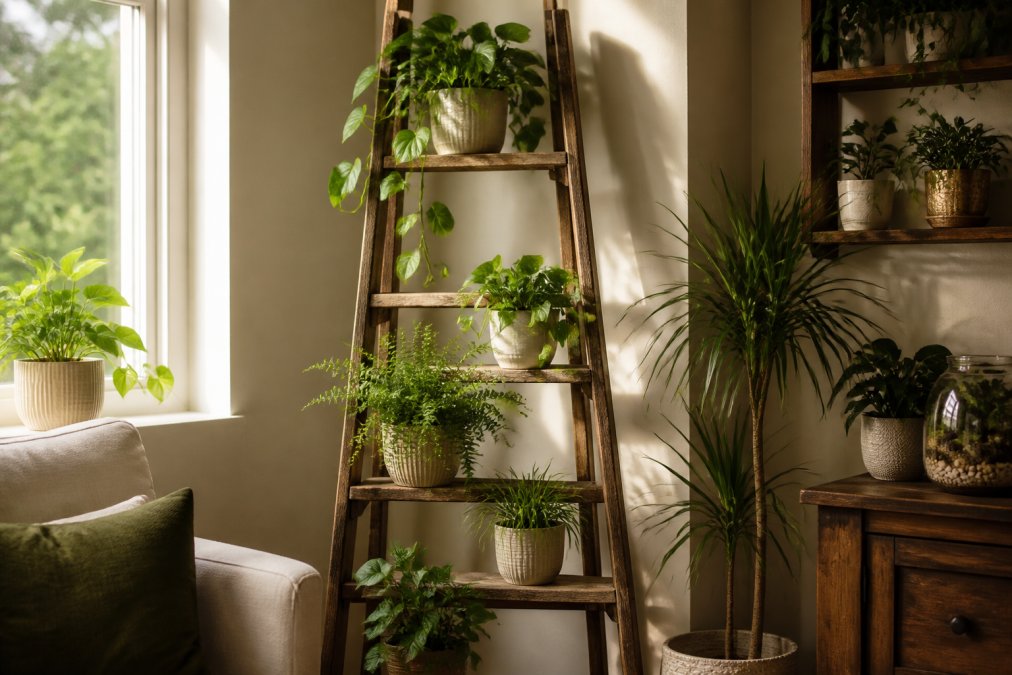
A rustic wooden ladder leaned against a wall becomes a tiered garden for trailing ivy, succulents, and flowering plants. Rest each pot on a rung, ensuring the ladder is stable and the pots have a lip or tray to prevent drips.
An old wooden chair with a missing seat can be reborn. Remove the broken seat and replace it with a sturdy board or a thick slice of log, creating a pedestal for a large fern or a grouping of smaller pots.
Repurposed crates and wooden boxes stack beautifully to create varied heights. Turn them on their sides to create cubbies for smaller plants, or leave them open-faced to display a collection of herbs in a kitchen window.
Vertical Displays That Save Space and Resources
When floor space is limited, the answer is to look up. Vertical displays allow you to cultivate a lush indoor garden without consuming valuable square footage, and they reduce the need for multiple bulky pieces of furniture, aligning with a minimalist ethos.
Hanging planters are an elegant choice. Macramé hangers made from natural cotton rope support trailing plants like pothos or string of pearls, drawing the eye upward and softening the architecture of a room. For a more modern look, consider simple metal hooks with ceramic or terracotta pots.
Wall-mounted shelves offer a flexible system for a plant grouping. Install a set of floating wooden shelves in a reading nook or beside a window to create a living wall effect. This approach allows you to mix trailing plants with upright varieties, creating visual balance and foliage density.
Ceiling hooks can hold a single statement plant, such as a large fern or a cascading hoya, in an otherwise empty corner. This draws attention to the plant's natural form without the need for a floor stand.
Indoor Plant Styling Best Practices for Healthy Growth
A beautiful display is effective only if the plants inside it thrive. Indoor plant styling best practices prioritize the health of your greenery, ensuring your arrangements last for years rather than weeks. The key is to design with the plant's needs in mind first and the aesthetic second: a healthy plant that lives for a decade is infinitely more beneficial than a series of short-lived replacements.
The Drainage Imperative
Drainage is non-negotiable for plant health. Every pot must have a way for excess water to escape; without it, water pools at the bottom, leading to root rot. Roots need oxygen as much as water, when soil is waterlogged, the air pockets fill with water, suffocating the roots and inviting harmful bacteria and fungi. If you love a decorative container without holes, use it as a cachepot and keep the plant in a separate, well-draining inner pot. This allows you to lift the inner pot out, water it thoroughly, let it drain completely, and then return it to its decorative shell.
Matching Plants to Light, Not Just Aesthetics
Lighting requirements are the most critical factor in plant placement. A sun-loving succulent will stretch and fade in a dim corner, while a low-light fern will scorch near a bright, south-facing window. Categorize your spaces by light intensity, bright, indirect light (near an east-facing window), medium light (a north-facing window), and low light (a dim hallway), and match your plants to these zones. A plant struggling for light will eventually need replacing, which is the most resource-intensive outcome.
The Microclimate of Grouping
Grouping plants creates a microclimate with higher humidity, which many tropical houseplants appreciate. As plants transpire, they release moisture into the air, and when clustered together, they create a pocket of humidity significantly higher than the surrounding room, particularly beneficial during dry winter months. Clustering also allows you to mix textures and heights, creating a more dynamic arrangement while making watering more efficient, as you can tend to a group of plants with similar needs at the same time.
Choosing the Right Growing Medium
A critical, often-overlooked aspect of display is the growing medium itself. Standard potting mixes often contain peat moss, harvested from carbon-rich peat bogs, a practice increasingly recognized as environmentally destructive. Look for peat-free potting mixes using alternatives like coco coir (a byproduct of the coconut industry), composted bark, or rice hulls, which often provide better aeration and drainage. When repotting, refresh the soil rather than discarding it entirely; mix old soil with new amendments like compost or perlite to extend its life.
Sustainable Ways to Display Indoor Plants on a Budget
Embracing thoughtful choices does not require a large budget. In fact, the most effective options are often the most affordable because they rely on creativity and reuse.
DIY and Thrifted Finds: Visit a local thrift store or flea market to find unique vases, teacups, and bowls. A collection of mismatched china can serve as charming, individual planters for small succulents and cuttings. This approach adds personality and history to your plant arrangement.
Glass Jar Propagation: Instead of buying new vases, repurpose glass jars from your kitchen to propagate cuttings in water. Watching roots develop in a simple mason jar is both practical and beautiful, and it allows you to expand your collection for free by sharing cuttings with friends.
Furniture Repurposing: Look around your home for items that can serve double duty. A sturdy stack of old hardcover books can elevate a small pot, while a cast-iron skillet or a vintage tin can become a unique planter for herbs.
| Budget-Friendly Option | What You Need | Best For |
|---|---|---|
| Thrifted China & Ceramics | A drainage layer of pebbles | Small succulents and herbs |
| Glass Jar Propagation | Clean jars with water | Cuttings and trailing vines |
| Repurposed Furniture | A stable base (stool, crate) | Larger statement plants |
| Upcycled Ladder | A sturdy wooden ladder | A collection of mixed pots |
Bringing It All Together: A Greener, More Beautiful Home
Creating a home that feels both personal and responsible is a journey of small, deliberate choices. By adopting these methods, you build a space that reflects a love for nature without compromising your principles.
This philosophy extends beyond the pots and stands. It lives in the textiles that soften a reading chair and the art that adorns your walls. A Gardenia Botanical Studies Faux Suede Pillow brings the beauty of an antique botanical illustration into your seating area, echoing the natural forms of your plants with a vintage, collected feel. The soft, rich texture pairs beautifully with the organic shapes of leaves and the earthy tones of terracotta and wood.
For a different accent, the Wisteria Botanical Studies Pillow introduces a cascade of lavender blossoms that mirrors the trailing vines in your hanging planters. These pieces from the Botanical Collection help unify the room, connecting your living plants with the timeless beauty of botanical art. [If you prefer a more rugged, organic feel, the Woodland Home Décor Collection offers complementary accents inspired by forest textures and tones that pair naturally with reclaimed wood and woven](/collections/woodland) baskets.
The most meaningful takeaway is that thoughtful choices and style are not opposing forces. When you choose to upcycle, repurpose, and buy less but better, you create a home with genuine character. Each crack in a vintage pot and each imperfection in a reclaimed wood shelf tells a story, making your space uniquely yours. Explore the Botanical Collection to find more ways to bring the quiet beauty of the natural world into your home.
Frequently Asked Questions
What are the most sustainable materials for indoor plant stands?
Look for reclaimed wood, bamboo, rattan, and seagrass, which are rapidly renewable or reused resources. Upcycled furniture pieces like wooden crates, stepladders, and stools also make excellent stands without requiring new materials. When buying new, check that any metal components are powder-coated steel or aluminum for longevity. Avoid composite woods with high-VOC adhesives and plastics that degrade quickly and end up in landfills.
How can I display indoor plants using repurposed materials?
Transform everyday items into plant displays: a ceramic teapot becomes a quirky pot for trailing plants, a wooden drawer mounts on the wall as a shallow planter, and glass apothecary jars hold cuttings in water. For larger plants, an old wooden chair or stool adds height and character. Ensure any repurposed container has proper drainage by drilling holes or using a liner pot, and clean it thoroughly before planting.
Are there eco-friendly ways to hang plants without plastic?
Yes. Use natural fiber ropes like jute, hemp, or cotton macrame cords for hanging planters. Wooden rings, brass hooks, and ceramic hangers are durable alternatives to plastic hardware. For a creative approach, repurpose leather scraps or fabric strips. Check that your ceiling hook is rated for the combined weight of the pot, soil, and plant, and water carefully to avoid damaging natural fibers.
What are the best indoor plant styling practices for small spaces?
Group plants at varying heights using shelves, wall-mounted planters, and tall stands to maximize vertical space. Choose a mix of upright, trailing, and bushy plants to create visual interest without crowding. Rotate plants regularly so all sides receive even light. Use a saucer or cachepot to protect surfaces, and keep foliage dust-free for better growth and a cleaner look.