Start With a Natural Material Palette
Incorporating nature themes in minimalist homes begins with materials, not objects. Wood, stone, and linen carry visual weight that paint and plastic cannot, without visual noise. A white oak console, a travertine side table, a washed linen throw: each brings raw material honesty into a room that would otherwise read as flat.
Minimalism strips a space to essentials, and those essentials have to earn their place. Natural materials earn it because they age, patina, and change with the light. This guide walks through the palette, the plants, the texture, and the upkeep, so the result feels calm rather than sparse.
Wood, Stone, and Linen in Neutral Tones
Warm minimalism lives or dies on tone. Cool grays and stark whites can make a natural palette feel clinical, so lean toward earthy tones: oatmeal, clay, mushroom, sand, and soft charcoal. These shades create visual tranquility while still reading as intentional.
Mix at least three materials in any room to avoid monotony. Wood brings warmth, stone adds weight and cool contrast, and linen softens both. Repeating a single finish everywhere flattens the room; vary the grain, the sheen, and the scale instead.
Organic Minimalist Decor Ideas That Warm a Room
Organic minimalist decor ideas work best when they replace quantity with meaning. One well-chosen object does more than five generic ones, and that principle decides whether a minimalist room succeeds or feels cold. The goal is not emptiness but deliberate restraint.
Botanical Prints and Collected Objects
Botanical prints are the quietest way to introduce nature themes without clutter. A single framed specimen, hung with generous wall space around it, reads as art rather than decoration. Group three at most, aligned to a shared baseline, and let the white space do the rest.
Collected objects follow the same rule. A cabinet of curiosities approach rewards depth over volume: a piece of coral, a pressed fern, a vintage brass magnifier. Each item should have a reason to be there. If you cannot say why it is on the shelf, it is clutter wearing a costume.
This is where Lace & Grit's botanical home décor collection fits naturally. A single botanical pillow on a linen sofa adds a focal point without tipping the room toward cottage style. The Gardenia Botanical Studies faux suede pillow is a good example: one specimen, one deep ground, one accent. It reads as collected rather than themed.

The Best Indoor Plants for Minimalist Homes
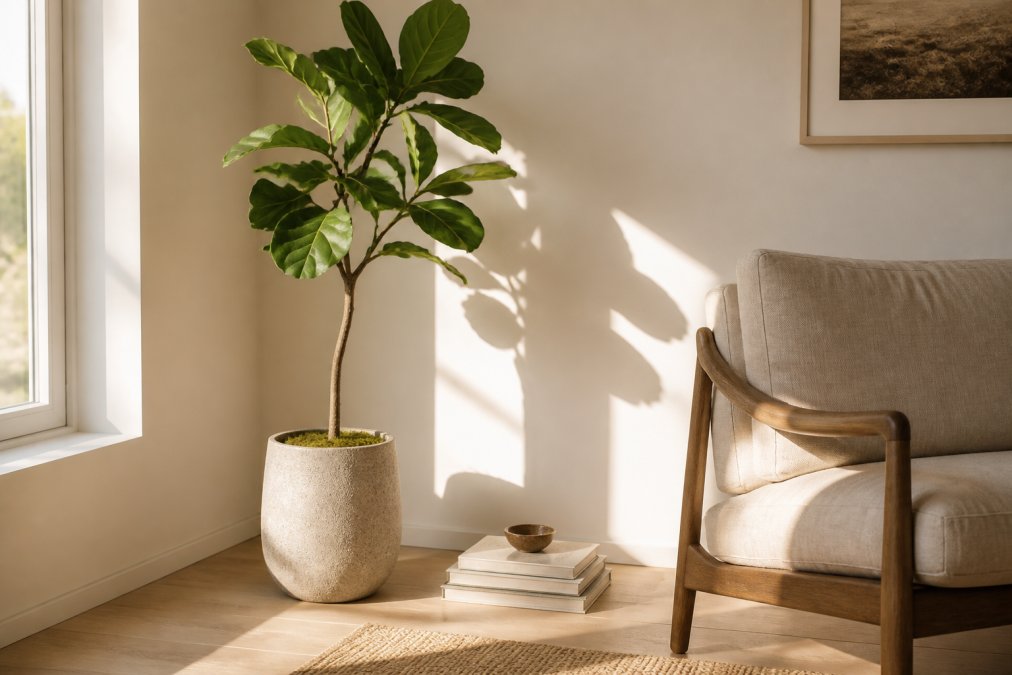
The best indoor plants for minimalist homes are sculptural, slow-growing, and forgiving. Architectural forms do more for a restrained room than dense foliage, and low-maintenance species suit busy households. Choose fewer plants, place them with intention, and let each occupy its own space.
Low-Maintenance Choices for Busy Households
- Snake plant: upright, architectural, tolerates low light and infrequent watering
- ZZ plant: glossy leaves, thrives on neglect, handles dry indoor air
- Rubber plant: bold dark foliage, needs bright indirect light
- Pothos: trailing habit, works on a high shelf where it can drape
- Cast iron plant: genuinely hard to kill, suited to dim corners
For a smaller footprint, a single olive tree or a bonsai-style ficus can anchor a corner. The United States Botanic Garden publishes guidance on indoor plant care that is worth consulting before committing to a species, particularly on light requirements.
The Maintenance Reality Most Guides Skip
A plant only reads as minimalist while it looks intentional. The moment it drops leaves, leans toward a window, or outgrows its pot, it stops being sculpture and starts being a chore. That is the part most plant lists leave out, and it decides whether a nature theme holds up past the first season.
A few patterns worth knowing before you buy:
- Growth habit matters more than size at purchase. A snake plant or ZZ plant grows slowly and holds its silhouette for years. A rubber plant or fiddle-leaf fig can double in height and block a sightline within a couple of seasons. If the room's calm depends on a clean line, choose the slow grower.
- Light direction changes with the season. A plant that thrived in a summer window may stall by midwinter as daylight shortens. Rotating a pot a quarter turn each week keeps growth even; moving it closer to the glass in winter compensates for shorter days.
- Watering is the most common failure point. Overwatering kills more houseplants than neglect. Most indoor species prefer to dry out between waterings, and a pot without drainage is the fastest route to root rot. When in doubt, wait.
- Dust is a design problem, not just a plant problem. A film on leaves dulls the one glossy surface in a matte room. Wiping leaves monthly restores the contrast that made the plant worth placing.
- Repotting is a seasonal task, not an emergency. Most houseplants do best when repotted in spring, before the growing season pushes new roots. Sizing up one pot diameter at a time avoids the soggy soil that comes from too much unused space.
Choosing Fewer, Better Plants
The minimalist instinct, fewer, better, applies to plants as much as furniture. One large specimen in a quiet ceramic or stone pot will do more for a room than five small pots scattered across sills and shelves. Grouping small plants into a single tray can consolidate visual noise, but the cleaner move is to edit down to the plants that genuinely earn their corner.
If a plant no longer suits the room, too tall, too sparse, too fussy, rehoming it is not a failure. It is the same discipline that keeps a shelf from filling with objects that no longer belong.
How to Layer Texture Without Clutter
Texture layering separates warm minimalism from a room that feels unfinished. Color and form alone leave a space visually flat; texture gives the eye something to travel across. Vary texture while keeping the palette tight.
Work in three registers. Start with a rough base: a jute rug, a stone floor, a plastered wall. Add a mid-layer of woven or slubbed fabric: linen cushions, a cotton throw, a wool runner. Finish with one smooth element for contrast, such as glass or polished metal.
Texture You Can Hear
Most guides treat texture as purely visual. It is not. The materials you choose also shape how a room sounds, one of the quietest reasons natural-material rooms feel calmer than their all-white counterparts.
Hard surfaces, glass, stone, plaster, bare wood floors, reflect sound. In a sparsely furnished room, those reflections stack into the slight echo that makes a space feel cold even when the palette is warm. Soft materials absorb them: a wool rug, heavy linen curtains, an upholstered chair, and a few cushions each soak up reflected sound, softening the room's acoustic signature without adding a single visible object.
This is why a minimalist room furnished in natural textiles often feels more settled than the same room in lacquer and glass, even photographed identically. The eye reads the palette; the ear reads the material. A room that sounds calm is easier to sit in for long stretches, the whole point of a nature-themed interior.
A few practical levers:
- Rugs do the heaviest acoustic work. A large wool or jute rug under a seating area absorbs more reflection than several small ones scattered around.
- Curtains matter more than they look. A floor-length linen or cotton panel softens both the light and the sound at the window, the hardest surface in most rooms.
- Upholstery beats hard seating. A fabric sofa or a linen-covered armchair absorbs sound that a leather or wood bench throws back.
- Books and textiles are quiet absorbers. A stack of books, a folded throw, a woven basket: each breaks up a hard surface and takes a little reflection with it.
Keeping Texture From Becoming Clutter
The failure mode is not too little texture; it is texture applied without restraint. A room with a jute rug, a linen sofa, a wool throw, a woven basket, a rattan chair, a macramé hanging, and a sheepskin stool has not layered texture, it has collected it. The minimalist version might keep the rug, the sofa, and one throw, and let the bare plaster wall do the rest.
A useful test: if you removed one textured element, would the room feel emptier or just less busy? If the answer is "less busy," the element was decoration, not structure. Keep the ones that hold the room together and let the others go.
Use Natural Light, Views, and Ventilation
Natural light is the most underrated element in a minimalist interior. A restrained room with good light feels expansive; the same room with heavy window treatments feels closed. Keep window coverings sheer or minimal, and let the architecture frame the view rather than compete with it.
Place furniture to preserve sightlines outdoors. A sofa pushed against a window blocks the indoor-outdoor connection that makes nature themes feel integrated rather than applied. Leave a clear path to the glass.
Ventilation matters too. Cross-ventilation keeps indoor air fresh and reduces the stuffiness of tightly sealed rooms. Where windows allow, open opposite sides of the home for a few minutes daily. The Environmental Protection Agency notes that indoor air can carry higher concentrations of some pollutants than outdoor air, making routine ventilation a practical habit rather than a luxury.
Simple Nature Themes for Renters and Tight Budgets
Renters face a real constraint: no structural changes, no permanent finishes. The workaround is to put nature themes into objects that move with you. A leaning mirror reflecting a window, a linen curtain panel, a single large plant, and a framed botanical print will transform a rental living room without a single nail.
Budget-friendly approaches that hold up:
- Swap hardware, not fixtures. New cabinet pulls change a kitchen's character for very little.
- Layer textiles. A throw and two cushion covers shift a sofa's mood entirely.
- Use removable wall hooks for lightweight botanical prints.
- Choose one statement plant over several small ones.
- Bring in a stone or ceramic tray to group small objects and reduce visual noise.
The Pink Dogwood Botanical Studies pillow and the Wisteria Botanical Studies pillow are both designed to sit on an existing sofa rather than demand new furniture. One accent, placed well, is often enough.


Caring for Indoor Nature Elements Year-Round
Maintenance is the part most guides skip, and it is where nature themes in a minimalist home either hold up or quietly fall apart. Indoor greenery, natural textiles, and raw wood all need seasonal attention, and the routines are short if kept regular.
| Element | Routine | Frequency |
|---|---|---|
| Houseplants | Check soil moisture, rotate for even light | Weekly |
| Foliage | Wipe leaves, inspect for pests | Monthly |
| Linen and cotton | Air out, spot clean | Monthly |
| Wood surfaces | Dust, apply a suitable wood conditioner | Seasonally |
| Stone accents | Wipe with a damp cloth, avoid acidic cleaners | As needed |
| Airflow | Open opposing windows for cross-ventilation | Several times weekly |
Light shifts through the year, so a plant that thrived in a summer window may struggle by midwinter. Move it closer to the glass as daylight shortens, and reduce watering to match slower growth. Textiles fade in direct sun, so rotate cushions and throws to even out exposure.
Conclusion
The hardest part of incorporating nature themes in minimalist homes is resisting the urge to add more. Restraint is the discipline; the palette, the plants, and the texture do the rest. When a room is built from honest materials and maintained with a light hand, it stays calm through every season.
Lace & Grit curates nature-inspired décor for exactly this kind of room: botanical, woodland, and cabinet of curiosities collections built around collected objects rather than mass-produced sets. The Hibiscus Botanical Studies pillow is a single accent that warms a neutral sofa without tipping the room toward busy. Explore the Botanical Collection to find the one piece that finishes the space.
Frequently Asked Questions
How do you make a minimalist home feel warm and natural?
Warmth comes from materials and light rather than objects. Choose wood, stone, clay, and linen in earthy tones, keep one or two textures per surface, and let daylight do most of the work with sheer curtains instead of heavy window treatments. A single well-chosen piece, such as a botanical pillow or a glass art panel, adds character without turning the room busy.
What is organic minimalism in interior design?
Organic minimalism keeps the restraint of minimalism but swaps stark surfaces for natural ones. Instead of glossy white and chrome, you get raw wood, stone accents, clay finishes, and soft textiles. The palette stays neutral, the lines stay clean, and the result feels calm rather than cold. It is less about owning fewer things and more about choosing pieces with tactile quality.
How can I use botanical elements without cluttering a minimalist space?
Treat each botanical piece as a focal point rather than filler. One large framed print, a single statement pillow, or a cluster of three small objects reads as intentional, while a dozen small items reads as clutter. Group similar tones together, leave empty space around the arrangement, and rotate pieces seasonally so the room stays visually quiet.
How does biophilic design fit into modern minimalism?
Biophilic design brings natural light, plants, natural ventilation, and organic shapes into a space to support well-being. It aligns closely with minimalism because both favor calm over abundance. In practice, that means positioning furniture near windows, adding one or two living plants, and choosing rounded forms over sharp angles. The goal is a room that feels restorative, not decorated.
Bringing nature into a minimalist home is less about how much you add and more about how carefully you choose. Lace & Grit offers nature-inspired decorative pillows, glass art, woven throws, and journals designed to sit within a restrained palette rather than compete with it. Secure checkout with 256-bit SSL and 2048-bit RSA encryption, fast dispatch, and a curated range that supports creative expression without clutter. Explore the Botanical Collection and let one well-chosen piece do the work.