Table of Contents
- Understanding Biophilic Design for Cabin Spaces
- Selecting Wood Textures and Exposed Log Walls
- Incorporating Stone Fireplaces as Focal Points
- Building Natural Texture Layering in Home Decor
- Choosing Earthy Color Palettes and Neutral Tones
- Modern Cabin Interior Design Ideas Using Natural Materials
- Botanical Home Styling Tips for Living Rooms
- Maintaining Natural Materials in Changing Climates
- Frequently Asked Questions
Last Updated: September 23, 2026
Understanding Biophilic Design for Cabin Spaces
Biophilic design is the practice of incorporating natural elements into interior spaces to foster a deeper connection with the living world. In cabin living rooms, this approach creates environments that feel grounded and restorative, inviting the forest, stone, and light indoors. The principle rests on a simple truth: humans are drawn to natural patterns, textures, and materials because we evolved surrounded by them.
A cabin living room designed with biophilic intent doesn't need to feel rustic or isolated. Instead, it balances raw, honest materials with comfort and intentionality. Think exposed wood grain alongside soft textiles, river stone accents paired with warm lighting, or views of trees framed by simple window treatments. The goal is to create a space that feels alive, not decorated.
Understanding how to choose natural elements for cabin living rooms begins with recognizing that every material carries weight and meaning. Wood speaks of time and growth. Stone suggests permanence. Woven fibers connect to human craft. When these elements are layered thoughtfully, they tell a story about who lives in the space and what they value.
Selecting Wood Textures and Exposed Log Walls
Wood is the foundation of cabin aesthetics, but not all wood reads the same way. Exposed log walls carry historical weight and raw authenticity. Reclaimed wood flooring or paneling adds patina and story. Lighter wood tones feel airy; darker finishes ground a room and absorb light.
When selecting wood for your cabin living room, consider the finish first. Raw, unfinished wood shows grain and color variation most honestly. It also requires maintenance in humid or temperature-fluctuating climates. A matte or satin finish protects without adding shine that feels out of place. Avoid high-gloss treatments, which contradict the natural aesthetic.
Exposed log walls work best when they're not the only textural element. Pair them with soft furnishings, artwork, or stone to prevent the room from feeling like a hunting lodge. A single accent wall of logs, rather than full coverage, often feels more refined. Reclaimed wood beams or salvaged barn wood offer similar character with less visual heaviness.
Wood grain itself is a design asset. Vertical grain patterns draw the eye upward and make rooms feel taller. Horizontal grain creates a sense of calm and stability. Mix grain directions subtly to add visual complexity without chaos.
Incorporating Stone Fireplaces as Focal Points
A stone fireplace anchors a cabin living room both physically and emotionally. River rock, fieldstone, and stacked slate each tell a different story. River rock feels smooth and collected, as though gathered from a nearby stream. Fieldstone suggests permanence and geological time. Stacked slate creates clean, modern lines while maintaining organic character.
The fireplace becomes a natural gathering point, so its material choice sets the tone for the entire room. A fireplace built from large, irregular stones feels more dramatic and rustic. Smaller, more uniform stones create a refined, almost meditative quality. The mortar color matters too, darker mortar recedes visually, while light mortar emphasizes the individual stones.
Consider the fireplace's scale in relation to your room. An oversized stone fireplace in a small cabin living room will dominate uncomfortably. A modest fireplace in a large room might feel lost. The ideal focal point is substantial enough to draw the eye without overwhelming the space.
Stone around the fireplace can extend beyond the hearth itself. A stone accent wall, stone shelving for displaying objects, or even a stone-framed window opening all reinforce the natural aesthetic. These extensions should feel purposeful, not repetitive.
Building Natural Texture Layering in Home Decor
Texture layering transforms a cabin room from sparse to inviting. This means combining smooth surfaces with rough ones, soft textiles with hard materials, matte finishes with subtle sheen. The interplay of textures engages the senses and creates visual depth.
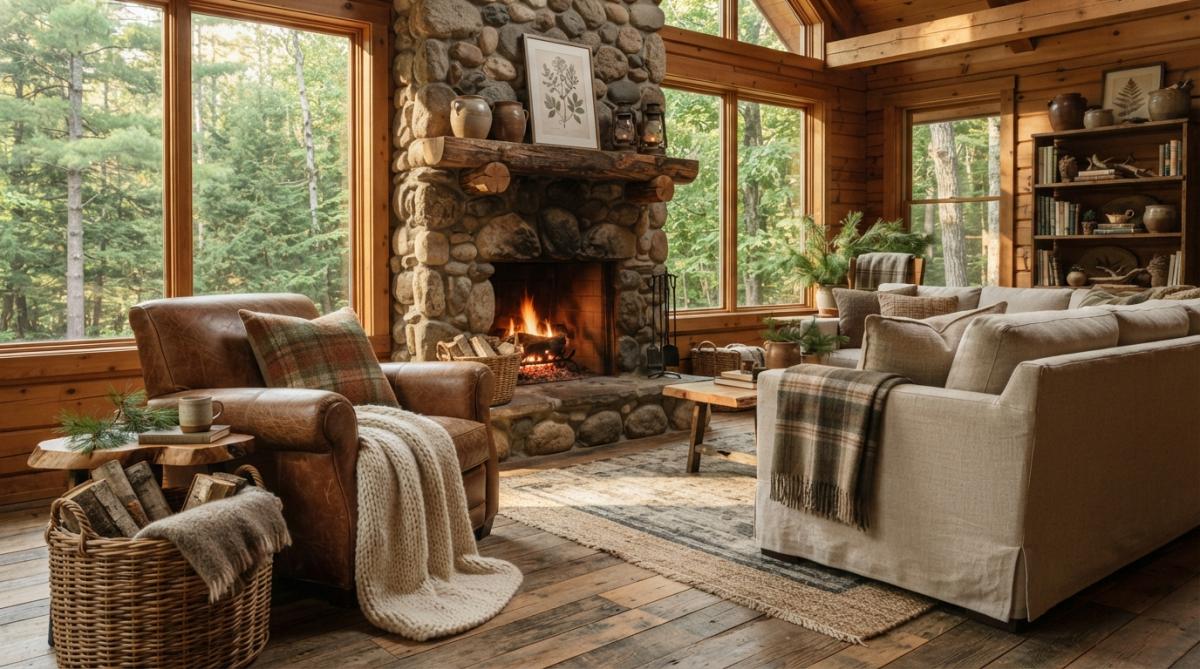
Start with a base of woven elements. Jute rugs, linen upholstery, and wool throws introduce tactile softness that balances hard surfaces. Baskets in natural fibers serve both function and aesthetic, holding blankets or firewood while adding visual warmth. These pieces invite touch, a key part of biophilic design.
Layer in wood at different scales. A large wooden coffee table, smaller wooden shelving, and wooden picture frames create rhythm. Mix wood tones slightly; a room of identical honey-toned wood feels flat, while subtle variation (light ash alongside warm walnut) feels collected and intentional.
Add stone elements beyond the fireplace. River rocks displayed in a shallow bowl, a slate coaster set, or stone bookends introduce cool, grounding materials. These smaller pieces prevent the room from feeling too warm or textile-heavy.
Textiles deserve careful attention. Linen, wool, and cotton in neutral shades support the natural aesthetic. Patterned pillows work if they reference nature, botanical prints, geometric patterns inspired by stone or wood grain, or animal illustrations that feel like naturalist studies rather than whimsical decoration. The Nature-Inspired Decorative Pillows collection offers pieces designed to complement cabin aesthetics while adding visual interest and comfort.
Fox Indoor Faux Suede Pillow | Woodland →
Choosing Earthy Color Palettes and Neutral Tones
Earthy color palettes ground cabin spaces in nature's own palette. Think warm grays inspired by stone, soft taupes that echo sand, forest greens that reference the view outside, and warm whites that suggest birch bark or weathered wood.
Warm gray is perhaps the most versatile cabin color. It bridges cool and warm tones, working alongside both pale wood and darker stone. It also recedes visually, allowing natural textures to take center stage. Avoid pure grays, which can feel sterile; instead, choose grays with subtle warmth or a hint of green.
Forest green works beautifully as an accent color. A single wall, a set of window treatments, or upholstered seating in soft forest green creates depth without feeling heavy. Pair it with warm neutrals and wood tones to prevent the room from feeling dark.
Taupe, a blend of gray and brown, echoes natural earth and stone. It's warm enough to feel inviting but neutral enough to let other elements shine. Taupe upholstery or wall paint provides a sophisticated backdrop for wood, stone, and woven accents.
Avoid pure white or stark black, both of which feel modern and can clash with rustic materials. Instead, choose off-whites with warmth, cream, ivory, or whites with a hint of gray. These feel more natural alongside wood and stone.
Consider how light changes your color choices throughout the day. A warm gray that feels inviting in afternoon light might feel cool at dusk. Test paint samples and fabric swatches in your actual space before committing.
Modern Cabin Interior Design Ideas Using Natural Materials
Modern cabin design strips away heavy ornamentation while keeping natural materials front and center. Clean lines, minimal clutter, and a focus on quality over quantity define this approach. It's cabin living without the lodge aesthetic.
Modern cabins often feature open floor plans with large windows framing forest or water views. Natural light becomes a design element itself. Wood, stone, and textiles remain the primary materials, but they're treated with restraint. A single statement wall of wood paneling rather than full coverage. One carefully chosen stone accent rather than multiple focal points.
Furniture in modern cabins tends toward simplicity. Low-profile seating, minimal legs showing wood grain, and upholstery in solid neutral tones all support the aesthetic. Avoid heavily carved or ornate pieces, which feel dated alongside modern design.
Storage solutions in modern cabin rooms are often built-in and made from natural materials.
Botanical Home Styling Tips for Living Rooms
Living plants and botanical elements bring dynamic life to cabin spaces. Unlike static materials, plants grow, change with seasons, and respond to light. They also improve air quality and create a tangible connection to the natural world.
Maintaining Natural Materials in Changing Climates
Natural materials require different care depending on your cabin's climate. Humidity, temperature fluctuations, and seasonal changes all affect wood, stone, and textiles differently.
Frequently Asked Questions
What is the 60-30-10 rule for decorating living rooms with natural elements?
The 60-30-10 rule allocates 60% to a dominant color (often a warm neutral or earthy tone), 30% to a secondary color, and 10% to accent colors. For cabin living rooms with natural elements, use 60% warm grays, taupes, or forest greens as your base, 30% for raw wood tones and stone textures, and 10% for accent pieces like botanical prints or woven baskets. This balance prevents the space from feeling overwhelming while maintaining visual interest and cohesion.
How do you balance natural textures in a small cabin living room?
In smaller spaces, prioritize quality over quantity. Choose one or two dominant natural materials (such as exposed wood beams and stone) rather than layering many textures. Use soft furnishings like neutral textiles and woven baskets to add tactile interest without visual clutter. Keep lighting soft and warm to enhance the sensory engagement of your materials. This approach creates a cozy retreat that feels intimate rather than cramped.
What makes natural materials work in humid or cold cabin climates?
Natural materials require different care depending on climate. In humid environments, ensure proper ventilation around wood and stone to prevent moisture damage and mold. In cold climates, allow wood to acclimate to temperature changes gradually to minimize warping. Use appropriate sealers on stone and wood surfaces for protection. Regular inspection and maintenance preserve both the aesthetic and structural integrity of your natural elements.
How can botanical elements enhance a rustic cabin interior?
Botanical elements bring organic softness to rustic spaces through live or dried plants, pressed botanicals in frames, or nature-inspired textiles and artwork. These pieces add sensory engagement and warmth without competing with raw architectural elements like exposed logs or stone. Layer botanical décor with neutral textiles and woven accents to create visual depth. Botanical home styling tips suggest grouping similar elements together and varying heights and scales for a collected, intentional appearance.