Table of Contents
- Why Handcrafted Decor Belongs in Modern Interiors
- The Art of Contrast: Pairing Artisan Pieces with Clean Lines
- How to Mix Textures in Home Decor Without Overwhelming a Room
- Statement Textiles: Anchoring a Room with a Woven Throw
- Styling Artisan Home Decor: Composition Rules That Work
- Caring for Handcrafted Pieces So They Last Generations
- Where to Find Authentic Handcrafted Decor
- Building a Curated Collection Over Time
- Frequently Asked Questions
Last Updated: September 5, 2026
Why Handcrafted Decor Belongs in Modern Interiors
The clean lines of contemporary design can sometimes read as cold, even sterile. This is where handcrafted home decor for modern spaces earns its place: it introduces the human element, a sense of history and touch that mass-produced pieces simply cannot replicate. Handcrafted home decor is the practice of using individually crafted, often one-of-a-kind objects to add warmth, texture, and narrative depth to an interior. For the modern homeowner, this guide from Lace & Grit explores how to weave those pieces into a minimalist aesthetic without losing the calm that drew you to it in the first place.
The appeal goes beyond simple aesthetics. A single sculptural object can transform a room from a showroom into a home, offering a conversation starter and a daily reminder of the hands that shaped it. Designers refer to this as creating a "curated space," one that reflects personality rather than a catalog page. The goal isn't to fill every surface but to select pieces with intention, allowing each object's character to shine against a backdrop of restraint.
The Art of Contrast: Pairing Artisan Pieces with Clean Lines
The secret to integrating handcrafted home decor for modern spaces is contrast, but the concept deserves more nuance than simply placing a rough object on a smooth surface. The most successful interiors build contrast through a deliberate dialogue of scale, finish, and visual weight. A towering, matte-black ceramic floor vase beside a low, glossy white console creates tension through silhouette and sheen. A heavily textured, natural-fiber wall hanging against a flat, cool-toned painted wall introduces warmth without breaking the room's minimalist calm.
A practical framework used by interior stylists is to pair materials that differ in at least two of three qualities: reflectivity (matte vs. glossy), temperature (warm wood vs. cool stone), and density (open, airy weave vs. solid, compact form). For example:
- Matte ceramics + high-gloss surfaces: A hand-thrown, unglazed stoneware bowl on a polished marble island brings out the subtle irregularities of the clay while softening the stone's formality.
- Open-weave textiles + solid furniture: A loosely woven cotton throw draped over a rigid, structured armchair adds a layer of softness that invites touch, breaking up the furniture's hard lines.
- Dark, heavy wood + light, airy linen: A substantial, dark-stained wooden stool next to a sheer linen curtain creates a pleasing tension between groundedness and lightness.
A common mistake is treating contrast as a binary, pairing one rough object with one smooth one and stopping there. Instead, think in terms of a material palette. Just as you would limit a color scheme, limit your material story. Choose a dominant material (say, the wood of your floor and furniture), a secondary contrasting material (a wool rug or linen upholstery), and a single accent material (a ceramic or glass piece). This creates a layered, intentional feel rather than a random assortment.
One of the most effective, and often overlooked, contrasts is between the ancient and the modern. A piece with visible tool marks or an irregular, organic edge holds a different kind of tension against a sleek, tech-integrated room than a merely textured object does. It introduces a sense of time and process. This is where the 'grit' of Lace & Grit's philosophy comes alive: the raw, imperfect, human-made object becomes the counterpoint to the seamless, efficient, machine-age environment. It is not about rejecting modernism but about giving it a soul.
To refine your eye, visit a museum with a strong design or craft collection, such as the Smithsonian's Cooper Hewitt or the Museum of Arts and Design. Observe how curators place a single, textured vessel against a plain wall or plinth. Notice the generous negative space they allow. That restraint is what gives the object its power, a lesson that translates directly to the modern home.
How to Mix Textures in Home Decor Without Overwhelming a Room
Learning how to mix textures in home decor is about balance and restraint. A good rule of thumb is to limit yourself to three to four distinct textures within a single room: perhaps smooth linen, nubby wool, cool glass, and warm wood. This variety adds depth without creating visual chaos. The goal is a layered, tactile experience that invites touch and feels inherently comfortable.
Start by identifying the dominant texture in the room, usually the largest surface like a sofa or rug. Then, introduce one contrasting texture in a major piece, such as a throw or curtains. Finally, add smaller accents like a ceramic vase or a woven basket. This gradual layering prevents the space from feeling overwhelming, a common concern for those new to mixing materials.
Statement Textiles: Anchoring a Room with a Woven Throw
Textiles are often the most accessible entry point for adding handcrafted character to a modern home. A statement woven throw is a versatile anchor; draped over a sofa, it adds a pop of color and pattern, while folded at the foot of a bed, it introduces a layer of cozy warmth. Consider a piece with intricate, beaded-look artistry that evokes the feel of a global artisan textile. The Beaded Look Lion Woven Blanket | Global Artisan Decor is a prime example, bringing a regal, nature-inspired focal point to a neutral living space.

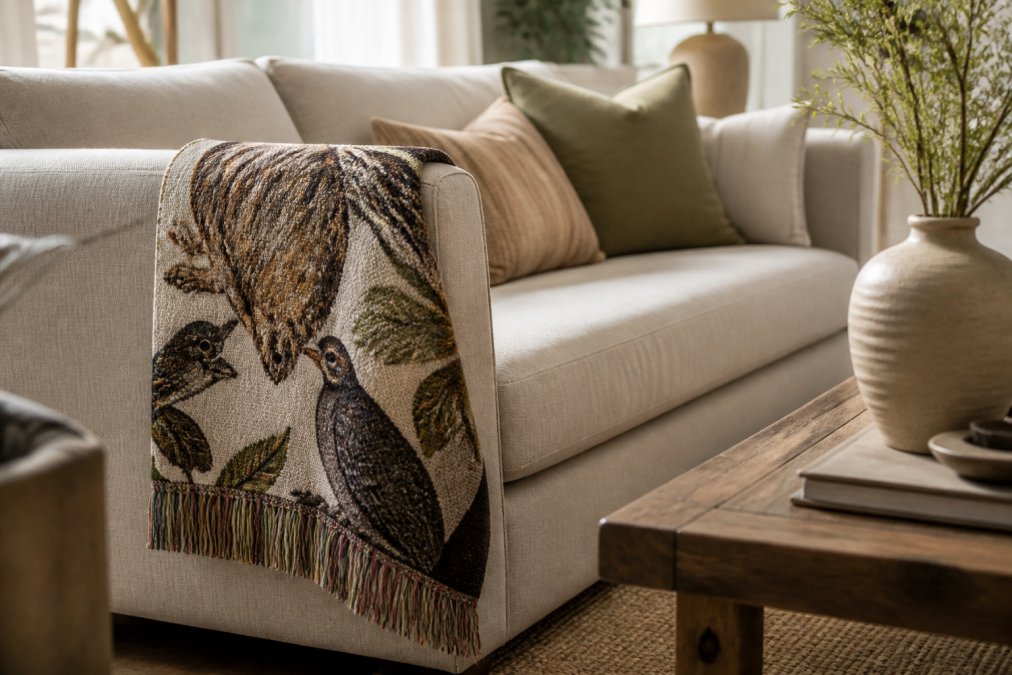
For those drawn to a more mystical or whimsical aesthetic, the Cozy Celestial Owl Woven Blanket | Whimsical Woodland Throw offers a deep, jewel-toned palette that works beautifully in a cozy reading corner. These pieces function as more than just utility items; they are works of art that anchor the room's design narrative.

Styling Artisan Home Decor: Composition Rules That Work
When it comes to styling artisan home decor, a few simple composition rules can make the difference between a space that feels intentional and one that feels chaotic. The first rule is to consider scale and proportion. A large, dramatic piece of wall art or a substantial floor vase needs room to breathe, so avoid crowding it with other objects. Conversely, a collection of small items, like apothecary bottles or curiosities, has more impact when grouped closely together on a tray or shelf.
Another key principle is the use of negative space. Allow your handcrafted pieces to stand alone, giving the eye a place to rest. This is particularly important in modern interiors where the minimalist aesthetic is prized. Let the unique silhouette of a hand-blown glass vase or the texture of a wooden bowl become the hero of a scene, uncluttered by unnecessary additions.
Caring for Handcrafted Pieces So They Last Generations
The durability of your pieces depends on how well you care for the materials. A piece meant to last generations requires a bit of attention. While most articles on handcrafted decor stop at styling advice, the true test of a piece's value lies in its upkeep. A well-maintained object not only survives but gains character, developing a patina that tells the story of its life in your home. Here is a practical, material-by-material guide to preserving your investment.
Woven Textiles: The Gentle Cycle is Your Friend
For woven textiles like the 100% cotton throws from Lace & Grit, proper care is simple: machine wash separately in cold water on a gentle cycle and tumble dry low. This preserves the vibrant colors and the integrity of the weave. Before washing, always check the care label, some natural dyes are more fugitive than others. To minimize fading, wash inside out and avoid prolonged direct sunlight when drying or displaying. For heavier, tapestry-like weaves, dry cleaning is often the safer choice to prevent distortion.
Wood: Condition, Don't Just Dust
Wood is hygroscopic, meaning it absorbs and releases moisture from the air, which causes it to expand and contract. This is why a piece that fits perfectly in a humid summer may feel loose in a dry winter. To prevent cracking, avoid placing wooden objects near radiators, fireplaces, or air conditioning vents. Dust regularly with a soft, dry cloth. A few times a year, apply a thin coat of a natural furniture wax or a food-safe mineral oil to nourish the wood and maintain its luster. Avoid silicone-based polishes, which can build up a residue that attracts dust and dulls the finish over time.
Ceramics and Glass: Hand-Washing is Non-Negotiable
Ceramics and glass should be hand-washed to protect any delicate glazes or finishes. The high heat and harsh detergents of a dishwasher can craze a glaze (causing fine cracks) or dull the surface of hand-painted pieces. Use warm water and a mild dish soap. For stubborn residue, soak the piece rather than scrubbing with an abrasive pad. When handling glazed ceramics, be mindful of 'crazing', the fine network of cracks that can appear in the glaze. While often harmless, it can harbor bacteria, so ensure pieces are thoroughly dried after washing.
The Role of Environment: Light, Humidity, and Dust
The single greatest enemy of handcrafted decor is ultraviolet light. Prolonged exposure can fade natural dyes, bleach wood tones, and weaken natural fibers. Position your most treasured pieces away from south-facing windows, or use UV-filtering window film. Similarly, extreme fluctuations in humidity are damaging. A room with a stable relative humidity between 40-50% is ideal for most materials. During dry winter months, a small humidifier can protect wooden pieces and textiles from becoming brittle.
A Simple Maintenance Schedule
To make care manageable, adopt a simple seasonal rhythm:
- Weekly: Dust wood and ceramic pieces with a soft, dry cloth. Vacuum textiles gently with an upholstery attachment.
- Monthly: Rotate cushions and throws to ensure even wear and fading. Fluff and air out woven pieces.
- Seasonally: Condition wooden pieces with wax or oil. Deep-clean textiles according to their care labels. Inspect for any loose threads, chips, or cracks that need attention.
By understanding the specific needs of each material, you ensure that your investment in craftsmanship continues to enrich your home for years to come. This is the quiet, patient work of stewardship, the practice of caring for objects that were made to last, so they can become the heirlooms of tomorrow.
Where to Find Authentic Handcrafted Decor
Sourcing authentic pieces requires a discerning eye. The term "artisanal" is often used loosely, so it pays to look for details that signal genuine quality. For textiles, this might mean a dense, heavy weave and a pattern that is clearly integrated into the fabric. For ceramics, look for the subtle irregularities of the potter's wheel, which add to a piece's unique charm.
Curated collections, like those found at Lace & Grit, simplify the process by vetting items for their artistic merit and quality. The Cabinet of Curiosities Home Décor Collection is an excellent starting point for those seeking unique, conversation-worthy pieces that blend the natural world with artistic expression. These collections offer a way to build a distinctive home without the risk of online marketplaces.
Building a Curated Collection Over Time
A home filled with character is rarely assembled in a single shopping trip. It is built over time through thoughtful acquisition. A curated space is a reflection of a life lived with curiosity and intention. Start by identifying a theme or a color palette that resonates with you, whether it is the deep greens of a woodland or the muted blues of the coast. Then, allow your collection to grow organically, adding pieces as you encounter them.
This approach ensures that every item in your home has a story, creating a space that is deeply personal and authentic. Rather than chasing fleeting interior design trends, focus on collecting pieces that speak to you. The result will be a home that feels both timeless and uniquely yours.
At Lace & Grit, the Botanical Home Décor Collection offers a beautiful starting point for this journey, with its emphasis on timeless craftsmanship and nature-inspired themes. Begin with one piece that truly speaks to you, and let your collection grow from there.
Frequently Asked Questions
How do you style handcrafted items in a modern home?
Start with one statement piece, like a woven throw with intricate detailing, and let it anchor the space. Keep surrounding furniture simple and neutral so the artisan item becomes the focal point. Limit yourself to two or three handcrafted pieces per room to maintain visual balance. Group smaller items like ceramics or glass art in odd numbers on shelves or tables. The goal is contrast: smooth surfaces against textured textiles, clean lines against ornate detailing.
What is the difference between mass-produced and handcrafted home accents?
Mass-produced items are made in large quantities, often with identical finishes and synthetic materials. Handcrafted decor typically shows subtle variations in color, texture, and pattern that come from human making. These pieces carry a sense of history and intention that mass production cannot replicate. When you choose handcrafted home decor, you bring objects into your space that have their own quiet character. The investment often reflects better materials and more thoughtful design, which is why these pieces tend to become keepsakes rather than disposable trends.
What materials work best for blending artisan decor with modern architecture?
Natural fibers like cotton, wool, and linen soften the hard edges of modern architecture. Wood adds warmth without competing with clean sightlines. Glass introduces light and color while remaining visually light. Ceramics bring an earthy, tactile quality that balances glass and steel. The key is choosing pieces that share a muted or nature-inspired palette. A woven cotton throw in deep earthy tones, for instance, complements a minimalist sofa without overwhelming it. Mixing these materials creates depth while respecting the simplicity of modern design.
How can handcrafted home decor add warmth to minimalist spaces?
Minimalist rooms can feel cold when they rely only on smooth surfaces and neutral colors. Handcrafted decor introduces texture, which catches light and invites touch. A woven throw with fringe edges draped over a chair adds visual softness. A ceramic vase with an uneven glaze brings organic imperfection to a stark shelf. These pieces carry the visible mark of human hands, which gives a room emotional warmth that mass-produced accessories cannot. Even one or two carefully chosen artisan items can transform a spare interior into a welcoming one.
Building a home that balances modern simplicity with the warmth of handcrafted decor is a rewarding process. It is about choosing pieces that bring beauty and character into your daily life. Lace & Grit supports this journey with thoughtfully curated collections of woven throws, decorative pillows, and glass art, all offered with secure payment processing and fast shipping. Explore the Botanical Collection and begin creating a space that reflects your personal style.