Choose the Right Corner for Your Nature-Inspired Reading Nook
A successful nature-inspired reading nook begins with location. Survey your apartment for corners that feel naturally sheltered yet connected to windows or views, balancing light, privacy, and access to natural elements.
An underused corner near a window, in an alcove, or beneath a sloped ceiling becomes more inviting than a sprawling exposed area. Trust spots that naturally draw the eye.
Consider these location factors:
- Natural light access: Proximity to windows without direct afternoon sun that causes glare
- Acoustic qualities: Corners that feel naturally quieter, away from hallway traffic or appliance noise
- Temperature stability: Areas that stay consistently cool and don't become cold drafts or heat pockets
- Visual privacy: Positions where you're not in direct sightline from the main living areas
- Accessibility: Locations you'll actually visit regularly, not tucked away so far you forget about them
Maximize Natural Light and Add Cozy Lighting for Reading Corners
Natural light transforms a reading corner from functional to restorative. Layer light sources so you can read comfortably at any time of day without strain or glare.
Assessing Your Natural Light
Observe your corner at different times; morning light differs from afternoon light, and seasons shift intensity. Direct sunlight creates glare and fades textiles, so seek bright, indirect light, what designers call "borrowed light."
Position seating to capture indirect natural light. Sheer curtains or adjustable blinds filter intense afternoon sun without blocking it. Light filtering through leaves, fabric, or neighboring buildings creates the gentle diffusion most conducive to focus.
If your corner lacks direct window access, reflect light from a pale wall or mirror, or use skylights if available. Even modest ambient light reduces reliance on artificial sources.
Layering Artificial Light for Reading Comfort
Supplement daylight with intentional artificial lighting to prevent eye strain and extend reading into evening. Layer: one task light for reading, one ambient source for atmosphere.
Task lighting does the heavy lifting. Position a floor lamp or swing-arm wall lamp beside your chair to cast light over your shoulder onto the page without shadows or glare. A 40-60 watt equivalent LED bulb (400-600 lumens) provides adequate brightness; adjustable fixtures let you angle light precisely.
Ambient lighting creates atmospheric glow. Wall sconces, table lamps, or pendants should emit warm light (2700K), which mimics sunset and promotes relaxation. Avoid cool white (4000K+), which feels clinical and suppresses melatonin.
Dimmable options are invaluable. A dimmer switch lets you adjust intensity based on time of day and available light, preventing the corner from feeling isolated during daylight or too cozy in evening.
Solving Common Small-Space Lighting Challenges
Glare on pages: Reposition the light source or angle your seating. Matte book covers scatter light better than glossy ones.
Insufficient light for reading: Test before committing; a 60-watt equivalent LED (800+ lumens) is often necessary in low-light corners.
Light spilling into adjacent spaces: Use directional fixtures (swing-arm lamps, clip lights) that concentrate light on your reading area rather than flooding the whole corner.
Choosing Fixtures That Fit Small Spaces
Floor lamps with narrow bases consume less visual space than wide-footed models. Wall sconces and swing-arm lamps eliminate floor footprint. For renters, clip lamps and rechargeable LED lights offer flexibility.
Select the Best Indoor Plants for Reading Nooks
Plants soften corners, add visual interest, and create biophilic connection. They filter air and add humidity, deepening the sense of sanctuary.
The challenge is finding varieties that thrive in low to moderate light while delivering air-cleaning benefits.
Assessing Your Corner's Light Level
Diagnose your light conditions honestly. "Low indirect light" is enough to read by without a lamp but not bright enough to cast a shadow. This differs from "bright indirect light" (near a north-facing window or several feet from a south-facing one).
Test by placing your hand between the light source and corner at midday. A faint shadow indicates low to moderate indirect light; no shadow means very low light. This determines which plants will thrive.
Low-Light Plants That Also Purify Air
The best reading nook plants combine dim-light tolerance with documented air-purifying ability.
Pothos adapts to nearly any light level and removes formaldehyde and benzene. It grows gracefully from shelves or trailing up walls, tolerates neglect, and suits readers who forget to water during deep focus.
Snake plants tolerate neglect and low light while filtering formaldehyde and xylene. They grow slowly and vertically, fitting snugly in narrow corners with architectural, sword-like leaves.
Philodendrons adapt to shade and create lush foliage. They're documented air purifiers that grow slowly in low light, requiring less maintenance.
ZZ plants grow slowly in low light, require minimal care, and remove xylene and benzene. Their glossy leaflets catch ambient light and create visual depth.
Peace lilies thrive in low to moderate light, purify air, and signal thirst by drooping. Their white spathes add subtle focal points and humidify the air.
Dracaena varieties tolerate various light conditions while purifying air. Their vertical growth suits corners, and many develop striking variegation.
Plant Placement and Arrangement
Position trailing plants on high shelves where they cascade downward, or use wall-mounted planters. Upright plants anchor corners and create subtle visual boundaries.
Group plants in odd numbers (three or five) to create natural, collected appearance. Vary heights and leaf shapes for visual rhythm.
Practical Care in a Reading Nook
Choose plants that tolerate inconsistent attention and signal their needs clearly. Avoid fussy plants that demand precise watering or humidity.
Water less frequently in low-light corners; plants use less water. Overwatering is the primary cause of death. Check soil moisture before watering; if the top inch feels dry, water thoroughly.
Rotate plants quarterly, moving them slightly closer to light for a few weeks, then back. This prevents legginess while keeping them adapted to your corner.
Essential Reading Nook Furniture and Seating
The chair anchors everything. Comfort and ergonomics matter as much as aesthetics.
Choose seating with good lumbar support that allows position shifts, upright for focused reading, reclined for contemplation, without overwhelming the corner visually.
Essential furniture pieces:
- Primary seating: A comfortable chair with armrests and back support
- Small side table: Surface for tea, books, or a reading lamp (18-24 inches tall works well)
- Footstool or ottoman: Elevates comfort and provides hidden storage in many designs
- Wall-mounted or floating shelves: Maximizes vertical space for books without consuming floor area
- Narrow bookcase or ladder shelf: Fits snugly in corners and creates a curated backdrop
Avoid oversized furniture. A smaller, well-chosen chair with excellent support beats a sprawling sectional. Create an intimate space, not a miniature living room.
Layer Soft Textiles and Natural Textures
Textiles add warmth, absorb sound, and create tactile comfort that makes a reading nook feel like a sanctuary.
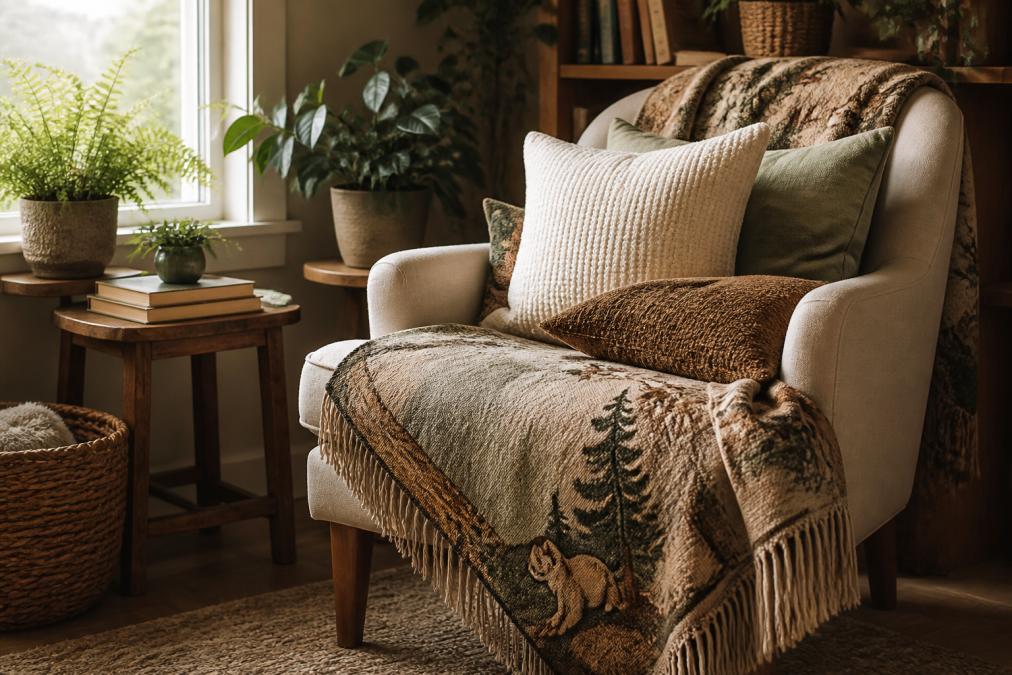
Consider these textile additions:
- Throw blankets: Drape over chair or footstool for warmth and visual softness
- Accent pillows: Mix solid colors with subtle patterns; aim for 2-3 pillows maximum in a small space
- Woven poufs: Function as footrests, extra seating, or storage
- Linen curtains: Frame windows softly without blocking light
- Wool rugs: Define the corner and add acoustic dampening
Create Acoustic Comfort and a Secluded Atmosphere
A reading nook surrounded by ambient noise never feels truly private.
Storage Solutions and Decluttering Strategies
Smart storage keeps the space functional without clutter.
Wall-mounted shelves, ladder shelves, or narrow bookcases fit snugly in corners. Floating shelves create visual lightness while providing practical storage.
Implement these storage strategies:
- Vertical shelving: Uses corner height without consuming floor space
- Baskets or bins: Corral blankets, journals, or reading supplies; choose natural materials like woven seagrass
- Under-seat storage: Ottomans with hidden compartments store books or supplies
- Wall-mounted organizers: Narrow pockets or shelves for journals, pens, or reading glasses
- Curated book selection: Keep only books you're actively reading or truly love; rotate seasonally
Bringing It All Together
A nature-inspired reading nook in a small apartment becomes complete when all elements work in concert: a comfortable chair layered with soft textures, plants that soften edges and filter air, light that invites you to stay, and storage that keeps the space functional.
Frequently Asked Questions
What makes a nature-inspired reading nook different from a regular reading corner?
A nature-inspired reading nook incorporates biophilic design principles, which use natural elements to create a calming atmosphere. Rather than standard furniture and décor, it weaves in botanical accents, organic textures, earth-tone color palettes, natural light, and indoor plants. This approach taps into our connection to nature, reducing stress and deepening focus, ideal for reading. The sensory experience of wood, stone, textiles with natural patterns, and living greenery transforms a simple corner into a sanctuary that feels restorative and intentional.
Which plants are best for low-light apartment reading nooks?
Pothos, snake plants, and ZZ plants thrive in low-light conditions and require minimal care. Philodendrons and peace lilies also adapt well to corners away from direct sun. These varieties are forgiving if you forget to water occasionally, making them perfect for readers who lose track of time. Arrange them at different heights using wall-mounted shelves or plant stands to create vertical interest without consuming floor space.
How can I add cozy lighting to a reading corner without taking up floor space?
Wall-mounted sconces or swing-arm lamps provide task lighting without furniture footprint. Position them at eye level when seated to reduce glare and eye strain. Clip lamps attached to shelves or the chair frame offer adjustable, space-saving options. Combine task lighting with ambient sources like a small accent lamp or string lights wound through shelving for a layered, hygge-inspired atmosphere. Warm-toned bulbs (2700K) create a more relaxing environment than bright white light, especially for evening reading.
What ergonomic considerations matter most for reading in a small space?
Proper seating height and back support prevent strain during long reading sessions. Your feet should rest flat on the floor or a footrest, and your back should have firm support. In tight quarters, a wingback chair or a corner chair with good lumbar support works better than a low pouf. Armrests at elbow height reduce shoulder tension. Pairing your seat with a small side table for books and tea keeps essentials within reach without cluttering the space. Adequate cushioning and a footrest or ottoman elevate comfort without requiring much square footage.
A thoughtfully designed reading nook transforms how you experience your apartment. It becomes the place you return to, the corner that feels like yours alone. Whether you're drawn to woodland aesthetics, botanical elements, or quiet curiosity, your nook can reflect that vision. Explore the Woodland Home Décor Collection to discover pieces that deepen your reading sanctuary's connection to nature and craft.