Create a Cabinet of Curiosities of Your Own
A weathered botanical print. A tiny glass vessel catching the afternoon light. An illustrated journal left open beside a candle, an old key, or a favorite stone gathered on a journey. Cabinet of curiosities decor begins with these small, intriguing moments — objects that suggest a story without explaining every detail.
This look is not about turning your home into a museum or filling every available shelf with curiosities. It is about surrounding yourself with pieces that reward a second glance: natural forms, old-world details, scientific illustrations, handmade textures, inherited treasures, and objects that make a room feel unmistakably yours.
The most inviting spaces feel as though they belong to someone who has spent years noticing interesting things and bringing a few of them home.
What Makes Cabinet of Curiosities Decor Feel Right?
The original cabinet of curiosities, or Wunderkammer, brought together remarkable objects from the natural world, science, art, exploration, and distant places — shells and specimens, maps and manuscripts, scientific instruments, artifacts, fossils, and things not easily categorized.
The modern interpretation can be much softer and more livable. Think natural-history inspiration rather than literal recreation.
The most compelling rooms balance mystery with intention. A raven illustration, a pressed fern, an antique brass instrument, and an amber-toned bottle can feel beautifully connected because they belong to the same visual world. Introduce too many unrelated colors or competing patterns, and that quiet sense of discovery begins to disappear.
Color does much of the editing for you. Deep moss, ink blue, warm tobacco, antique brass, parchment, charcoal, and muted plum create a grounded foundation. That does not mean every surface needs to be dark. Cream paper, clear glass, warm wood, botanical greens, and soft neutral walls keep the atmosphere from becoming heavy.
Texture matters just as much. Look for objects that feel as though they have a history: woven textiles, etched or textured glass, aged-looking metal, matte paper, carved wood, linen, leather, and richly illustrated surfaces. Even newly made pieces can carry the feeling of something collected over time when their materials and imagery have depth.
Never Miss an Issue
Enjoy stories about curious objects, natural history and homes filled with character? Receive The Lace & Grit Magazine—a free, thoughtfully curated monthly digital lifestyle magazine celebrating beautiful homes inspired by nature, history & curiosity.
Start With One Story, Not a Shopping List
A cabinet of curiosities interior feels collected when it has a point of view. Before arranging a shelf or choosing wall art, decide what kind of wonder you want the room to hold.
Perhaps it is an apothecary mood, with medicinal botanicals, amber glass, old labels, brass details, and quiet candlelight. Perhaps you are drawn to woodland folklore: mushrooms, ravens, ferns, moths, forest maps, and natural-history studies. A coastal interpretation might bring in shells, seaweed illustrations, weathered blue glass, marine specimens, and antique navigation imagery.
These worlds can overlap, but allowing one of them to lead gives the room its story.
This approach is especially helpful in smaller rooms, where every decorative choice carries more visual weight. You do not need an antique specimen cabinet or a wall of built-in shelves. A bedside table, entry console, floating shelf, writing desk, or one section of a bookcase can become a personal little archive.
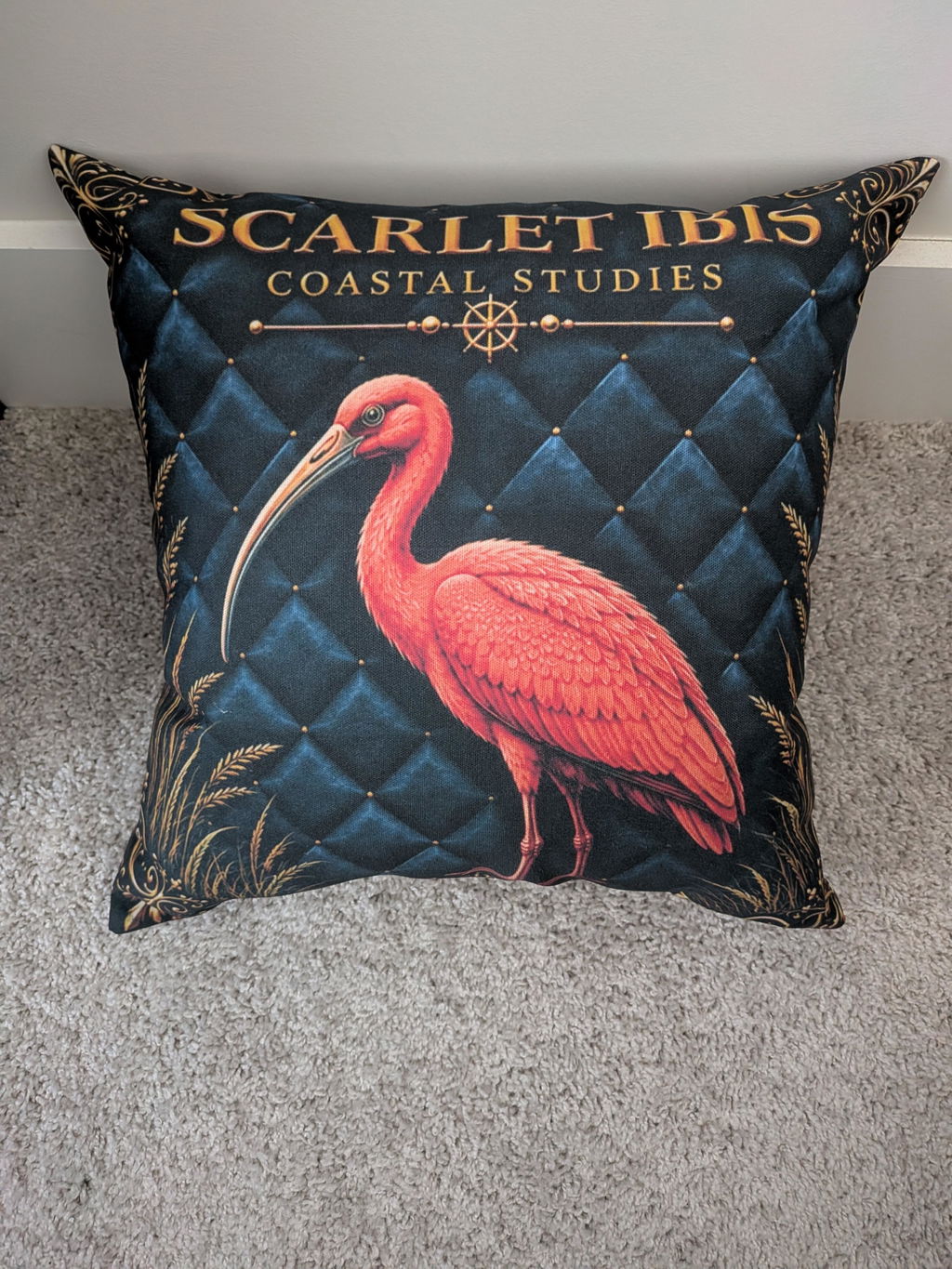
Begin with a visual anchor. It might be a framed natural-history print, a richly illustrated art piece, a woven throw, a beautifully patterned pillow, or a grouping of specimen-inspired artwork. Then repeat two or three of its colors, materials, or motifs nearby.
In our own interpretation of the Cabinet of Curiosities look, a vintage window frame filled with natural-history artwork becomes the anchor for the room. Lantern-style lighting, an antique wooden chair, old books, botanical specimens, a globe, a camera, and a few carefully chosen curiosities build the story around it.
Nothing needs to match perfectly. The pieces simply need to feel as though they might have been collected by the same person.
Let the Objects Earn Their Place
Not everything in your collection needs to be genuinely old, rare, or expensive.
A handwritten note from someone you love, a feather discovered on a walk, a stone brought home from a memorable place, an inherited photograph, a personalized keepsake, or a beautiful notebook you actually use can bring more meaning to a room than an anonymous antique ever could.
The question is not, “Is this unusual enough?”
Ask instead, “Would I miss this if it were gone?”
That is how a collection begins to have heart.
Build Layers That Invite a Closer Look
Perfectly flat, evenly spaced displays can be tidy, but cabinet of curiosities decor benefits from a little visual rhythm. Layering gives the eye somewhere to travel and allows a simple arrangement to feel richer without becoming crowded.
Begin with the back layer: framed art, a mirror, an architectural piece, or a larger natural-history print. Add a middle layer such as a branchy vase, an art board, a cloche, or a stack of antique-looking books. Finish with a smaller tactile object in front — perhaps a stone, magnifying glass, brass object, tiny vessel, or found natural specimen.
This simple front-to-back approach creates dimension while keeping the arrangement intentional.
Vary the heights as well. A tall vessel beside a low stack of books and one smaller object creates a pleasing visual triangle. If everything is the same height, the display can feel static. If every piece is tall, ornate, and demanding attention, the collection can turn into visual noise.
Glass is particularly useful in these rooms. A clear vessel, bell jar, cloche, or textured glass accent gives the eye a resting place among darker woods and richly illustrated pieces. Metal adds definition, especially in black, bronze, aged copper, and antique gold.
Then bring in textiles. A woven throw, botanical pillow, soft linen curtain, or tapestry-like fabric keeps all those harder surfaces from feeling overly formal or precious.
The goal is abundance, not clutter.
One remarkable specimen-inspired object with room around it often carries far more presence than a row of tiny unrelated pieces.
Bring Curiosity Into Everyday Rooms
Cabinet of curiosities decor is often pictured in a grand library or shadowy study, but it can live comfortably almost anywhere in the home.
In a living room, begin with a nature-inspired pillow or woven throw to establish the palette. Echo those colors through framed artwork, books, and a few carefully selected objects on a coffee table or console.
Keep the room usable. A tray holding a candle, a small book, and one sculptural object creates atmosphere without taking over the table.
In an entryway, create a small scene rather than filling the entire surface. A moody natural-history print, a dish for keys, an old book, and one intriguing decorative object can make a memorable first impression.
Bedrooms often suit the quieter side of this style beautifully. Pair soft bedding with darker botanical or natural-history accents, an illustrated journal, old books, and a reading lamp that casts a warm pool of light.
The result should feel like a retreat where stories have gathered — not a display you are afraid to touch.
Kitchens and dining rooms can lean toward the apothecary side of the aesthetic with botanical artwork, herb imagery, amber bottles, glass accents, brass details, and functional art. Keep food-preparation areas clear and allow the decorative elements to live where they can be enjoyed without getting in the way of daily life.
Mix Old-Looking and New With Confidence
A home filled entirely with genuine antiques can be wonderful, but it is not the only way to create a collected atmosphere.
New pieces can provide consistency in scale, color, and condition, while vintage and inherited objects contribute irregularity, history, and personality. Together, they often create the most believable rooms.
If you have inherited pieces, give them enough breathing room to be noticed. An old compass, family photograph, worn book, or small keepsake becomes even more interesting when paired with something cleaner and newer.
The reverse works beautifully too. A newly created botanical art piece, illustrated pillow, journal, or decorative glass piece gains another layer of character when placed beside aged wood, brass, antique books, or an old-fashioned lamp.
There is no need to make everything appear artificially old. Crisp paper, polished glass, fresh textiles, and living greenery belong beside weathered wood and timeworn objects.
That contrast keeps the room from becoming a stage set.
Edit Like a Collector, Not a Maximalist
There is a natural trade-off in a curiosity-filled home: too little can feel generic, while too much can cause even your most interesting treasures to disappear into the background.
Editing is not a rejection of abundance. It is what allows individual objects to remain visible.
Every few months, tuck a few pieces away and bring others forward. Familiar treasures become interesting again when they appear in a different setting, and seasonal decorating becomes much easier.
Spring may invite lighter botanical studies and fresh greenery. Summer can bring forward shells, marine illustrations, navigation pieces, and coastal finds. Autumn naturally suits woodland imagery, amber glass, aged brass, darker botanicals, and apothecary details.
Look for repetition without insisting on perfect coordination. Two moth motifs, a recurring brass finish, a thread of deep green, or several pieces of warm parchment may be all you need to connect an arrangement.
Perfect matching can make a room feel staged. Gentle echoes make it feel collected.
That philosophy is also at the heart of the Lace & Grit collections. The artwork and functional pieces are designed to layer easily with books, heirlooms, natural finds, vintage objects, and the things that already carry your own memories.
Make Room for the Next Story
Perhaps the loveliest thing about a cabinet of curiosities is that it is never really finished.
It changes when you return from a trip with a small treasure in your pocket. When someone gives you a meaningful gift. When an old family object finds its way into your home. When you discover an illustration you cannot stop looking at, or simply begin to notice beauty in an ordinary thing.
Leave a little room for those discoveries.
Choose pieces that feel like invitations — to linger, to remember, to open a book, to write something down, or to tell a guest the story behind that unusual little object on the shelf.
A meaningful room does not need to reveal everything at once.
It only needs to leave room for the next story.